







Search Results for: China-Ecuador Free Trade Agreement
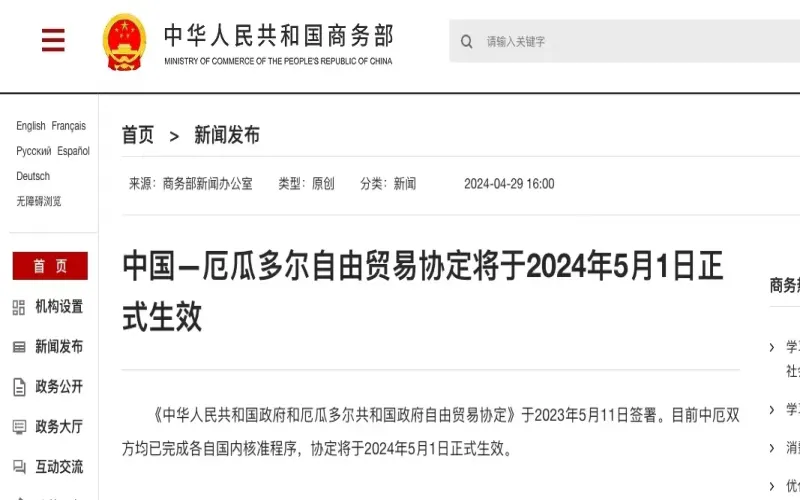
China-Ecuador FTA Takes Effect on May 1: 90% of Tariff Lines to Gradually Reach Zero Tariffs, Coffee and Other Product Exports Set to Benefit
The free trade agreement signed between China and Ecuador will officially take effect on May 1, 2024. Approximately 90% of tariff lines on both sides will gradually have tariffs eliminated, with 60% achieving zero tariffs on the day the agreement takes effect. When Ecuadorian agricultural products such as bananas, coffee, cocoa, and shrimp enter the Chinese market, import tariffs will gradually be reduced from 5%–20% to zero, injecting new momentum into the country's export trade. At the same time, Ecuador is facing drought-related power rationing and a diplomatic crisis domestically, and export industries such as coffee have been affected to a certain extent. This article will review the core contents of the agreement, Ecuador's current economic situation, and the relevant background of China's implementation of zero tariffs on many African countries. [more…]
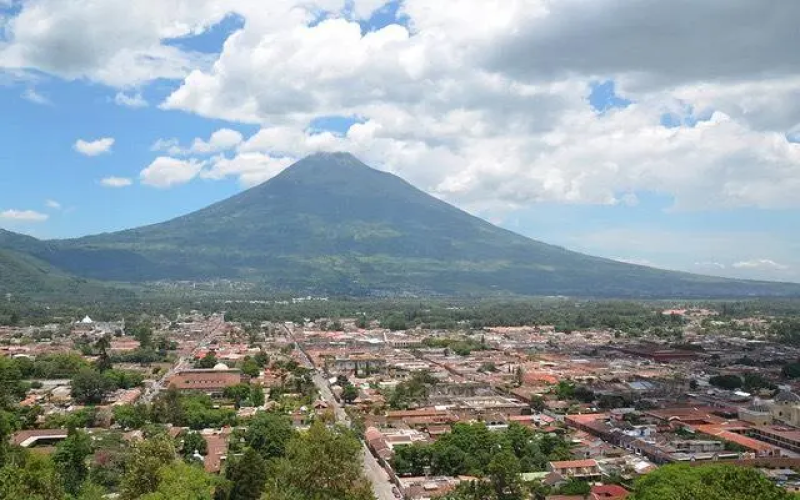
Guatemalan Coffee Generates Nearly a Billion Dollars in Annual Foreign Exchange, South Korea Free Trade Agreement Officially Takes Effect
In the 2022-2023 coffee year, Guatemala's coffee industry generated US$944 million in export revenue, firmly maintaining its position as the country's leading agricultural export. Although export value declined compared to the previous year due to international price fluctuations and the El Niño phenomenon, the industry remains optimistic about the outlook for 2024. At the same time, Guatemala has officially joined the free trade agreement between South Korea and the Central American countries, injecting new momentum into coffee exports. The president of Anacafé predicts that coffee production in the 2023-2024 coffee year is expected to reach 4 million quintals, and Guatemala's coffee competitiveness and position in the international market will be further enhanced. [more…]
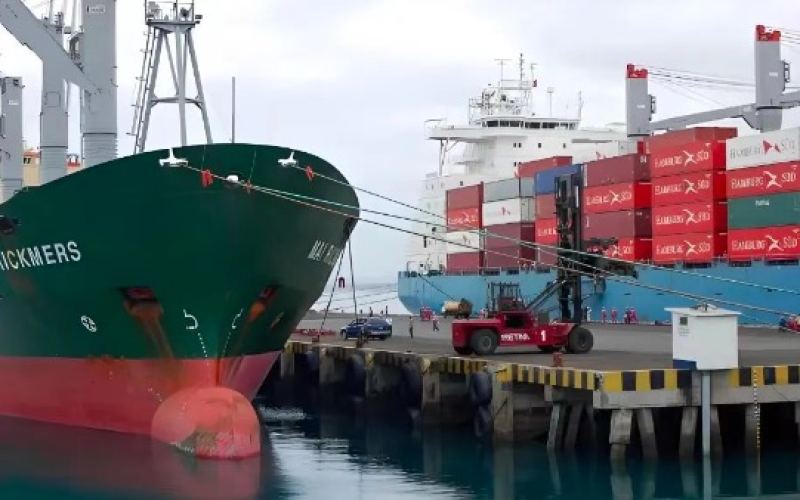
Tomorrow will officially take effect! China and Ecuador mutually cancel tariffs.
According to the news of the Chinese business website, on May 11, 2023, China and Ecuador signed the "Free Trade Agreement between the Government of the People's Republic of China and the Government of the Republic of Ecuador". At present, both China [more…]

East Africa Storms Hit Coffee Regions: Farmland Flooded in Ethiopia's Sidama, Kenya's Nyeri and Beyond, Heightening Risk of Reduced New-Crop Yields
Recently, multiple East African countries have been hit by prolonged heavy rainfall and flooding, affecting major coffee-producing nations such as Ethiopia, Kenya, and Tanzania. Floods have destroyed farmland, roads, and homes, and coffee trees in their growing period face serious threats. Among them, the damage in Ethiopia's well-known Sidama region and Kenya's central producing areas is particularly concerning. At the same time, the Ethiopian government has announced the launch of its first special economic zone and signed an agreement with a Chinese company to cooperate on building the Lemi Free Trade Zone, focusing on areas such as coffee processing. This article will review the specific impact of this disaster on Africa's coffee industry and its subsequent trajectory. [more…]

China-Peru FTA Upgrade Negotiations Conclude: Peruvian Coffee Exports Face Opportunities Amid Cold Snap Challenges
China and Peru have substantially concluded negotiations to upgrade their free trade agreement, opening a new chapter in bilateral trade and investment cooperation. During her visit to China, Peruvian President Boluarte actively promoted investment opportunities, while China's ever-growing coffee consumption market has also injected momentum into Peru's coffee exports. In the first quarter of 2024, Peru's coffee export growth rate reached 69%, and the soon-to-be-completed Chancay Port is regarded as South America's gateway to Asia. However, just as El Niño has retreated, La Niña may return, and low temperatures will directly hit the coffee harvest season from May to September. With opportunities and challenges coexisting, Peru's coffee industry is standing at a critical crossroads. [more…]

Chinese Investment of 50 Million USD to Develop Ethiopia's Gada Special Economic Zone: Opportunities and Security Challenges for the Coffee Processing Industry
Recently, the Ethiopian Investment Commission signed a subcontractor developer agreement with the Chinese enterprise CKIIG to develop 20 hectares of land in the Gada Special Economic Zone, with a total investment of 50 million USD (about 6 billion birr). The project focuses on areas such as coffee processing and is expected to enhance Ethiopia's coffee processing technology and export competitiveness. However, Ethiopia currently faces multiple challenges, including armed conflict, kidnapping incidents, earthquakes, and currency depreciation, causing coffee industry costs to keep rising. Front Street Coffee will continue to follow developments in the origin and bring frontline news to coffee lovers. [more…]

US Extends National Emergency on Ethiopia, Adding New Uncertainties to Coffee Export and Trade Prospects
The United States White House announced on September 6 that it will continue to impose a national emergency on Ethiopia, a decision that came after news of a currency swap agreement between China and Ethiopia. Ethiopia's finance minister has confirmed the existence of the agreement, but specific details and the timeline have not yet been made public. Meanwhile, the United States has imposed a state of emergency on Ethiopia since 2021 under the pretext of the National Emergencies Economic Powers Act, and this extension will run until 2025. Ethiopia was removed from the African Growth and Opportunity Act (AGOA) in 2022, and tariffs were reinstated on major export goods such as coffee, textiles, and leather products, dealing a severe blow to the economy. Although the U.S. attitude slightly eased after Ethiopia implemented a new foreign exchange policy in August of this year, AGOA eligibility remains out of reach. Germany is the largest importer of Ethiopian coffee, while the United States ranks only fourth, accounting for 9.3 percent. The continuation of the state of emergency may further restrict bilateral trade, reduce U.S. imports of Ethiopian coffee, and at the same time hit Ethiopia's exports of fertilizer and industrial supplies, exacerbating local price increases and the rising cost of coffee. [more…]
From Juan Valdez to Coffee Chains: The History, Challenges, and Transformation of Colombia's Coffee Industry
Colombian coffee is renowned worldwide for its mild, low-caffeine Arabica varieties, and the image of Juan Valdez—wearing a wide-brimmed straw hat and leading a donkey—is deeply ingrained in people's minds. From the founding of the National Federation of Coffee Growers in 1927, to the creation of the classic brand ambassador by an advertising agency in 1959, to the opening of Juan Valdez cafés in the 21st century to compete directly with Starbucks, the Colombian coffee industry has walked a path of transformation from passive reliance on the futures market to actively building its own brand. This article traces the origins and development of the Juan Valdez brand, analyzes the impact of international coffee price fluctuations on coffee farmers, and ventures deep into the mountains of Huila Department to document the real lives and aspirations of organic growers. It also examines the potential and challenges of Colombian coffee in emerging markets such as China. [more…]

Starbucks Ends Fair Trade Certification Partnership, Marking a Major Shift in Coffee Ethical Sourcing Standards
Starbucks has announced it will not renew its contract with Fairtrade, meaning coffee sold in its global stores will no longer carry the Fairtrade certification label. This decision has raised questions about its commitment to ethical sourcing. Starbucks says it will instead rely on the C.A.F.E. Practices standard, developed jointly with Conservation International and independently audited by the third-party organization SCS Global Services. However, many groups worry that without Fairtrade's independent oversight, the C.A.F.E. standard may not truly safeguard coffee farmers' rights on core issues such as minimum purchase prices and sourcing from smallholder cooperatives. This article reviews the history of Starbucks' partnership with Fairtrade, the origins and controversies of C.A.F.E. Practices, and Starbucks' past reversals on its ethical sourcing stance, offering coffee lovers a full picture of this event. [more…]
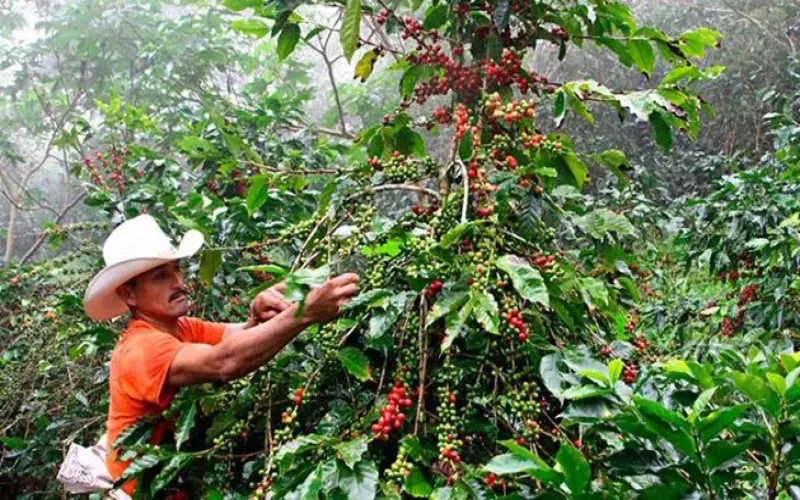
Honduras' coffee industry faces multiple challenges: the spread of leaf rust combined with drought may cause production to plummet by 24% in the 2023/24 season.
The latest report from the United States Department of Agriculture shows that Honduras, Central America's largest producer of washed Arabica coffee, is facing a severe test. In the 2023/24 fiscal year, the country's coffee production is expected to be only 5.5 million bags (60 kg per bag), a sharp drop of 24% from the previous year, while exports will also fall from 6.2 million bags to 5 million bags, a decline of 19%. Extreme heat and drought, a large-scale outbreak of coffee leaf rust, and a persistent labor shortage are the core factors behind the decline in production. At the same time, the Honduran government has introduced tax-exemption policies and is accelerating free trade negotiations with markets such as China in an attempt to ease the plight of coffee farmers. This article will combine the USDA report with data from the Honduran Coffee Institute to provide a comprehensive analysis of the ins and outs of this industry crisis. [more…]
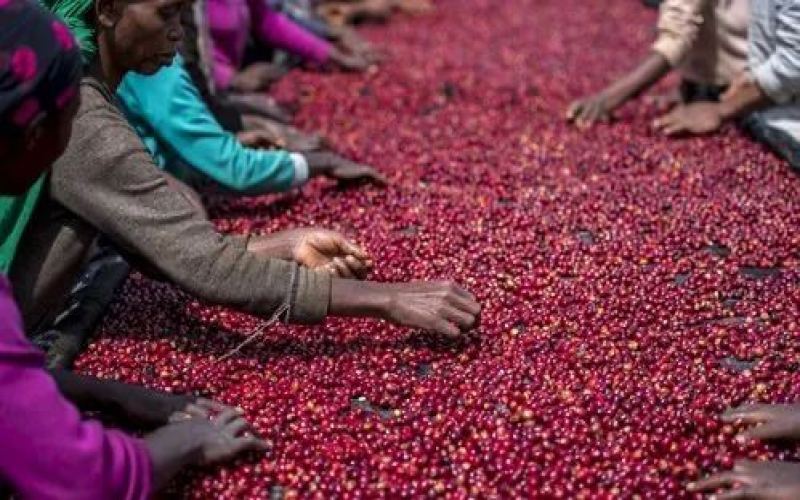
Ethiopian coffee exports earn $570 million in half a year, seeking a way out through the Somaliland port agreement
The latest data from the Ethiopian Coffee and Tea Authority shows that in the first half of the 2023/24 fiscal year, the country's coffee exports reached 117,900 tons, with export revenue exceeding US$570 million. As one of Africa's most important coffee-producing countries, Ethiopia's coffee industry is facing the dual test of global market volatility and regional conflict. At the same time, in order to escape the predicament of being a landlocked country and broaden its export channels, Ethiopia signed a port lease memorandum of understanding with Somaliland, obtaining a 50-year right to use the Port of Berbera in exchange for recognizing Somaliland's independence. This article will review the latest developments in Ethiopia's coffee exports, the challenges it faces, and the far-reaching impact of this port agreement on the country's coffee trade. [more…]

Ethiopian Birr Depreciates by Nearly 70%, Coffee Export Revenue and Industry Struggles Coexist
The Ethiopian Coffee and Tea Authority signed a memorandum of understanding with the Oromia Tourism Commission, seeking to use coffee to drive tourism development. In the previous fiscal year, the country earned US$1.4 billion in foreign exchange from coffee exports, but the industry is broadly worried about the impact of the sharp fall in the exchange rate—the birr has depreciated by nearly 70% against the US dollar, and the local cost of living has risen sharply, with prices of staple foods such as onions, cooking oil and teff soaring. The government is releasing supplies to stabilize prices while preparing to regain AGOA eligibility. However, with the cloud of armed conflict still hanging over the country, the coffee industry faces multiple pressures from rising cultivation costs, limited productivity and political instability. [more…]

Why Is Jamaican Blue Mountain Coffee So Expensive? A Full Guide to Authentic Blue Mountain Bean Prices and Grade Identification
Jamaican Blue Mountain coffee is hailed as one of the world's top coffees, and behind its high price lie both the scarcity of natural conditions and the role played by historical trade monopolies. After the Japanese company UCC provided aid to Jamaica last century, ninety percent of Blue Mountain production was locked into supply for Japan, causing international market shortages. Only after the 2008 agreement expired did Blue Mountain coffee gradually flow to more countries, and Chinese consumers can now also directly import authentic Blue Mountain beans. However, the market is flooded with confusing products such as "Blue Mountain flavor" and "Blue Mountain blend." How can one tell authenticity? How many grades does Blue Mountain coffee have? And how should Front Street Blue Mountain No. 1 be brewed? This article will answer these questions one by one. [more…]

Guatemalan Coffee Exports to China May Face Obstacles: The Trade Shift Behind the Foreign Ministry's Statement
Recently, news circulated from the Guatemalan exporters' alliance that China has banned the entry of the country's coffee and macadamia nuts. Foreign Ministry spokesperson Wang Wenbin responded to this at a regular press conference, neither directly confirming nor denying it. The background of the incident is that the Guatemalan president held a video meeting with the leader of the Taiwan region, and the foreign minister traveled to Taiwan, severely undermining the One-China principle, putting China-Guatemala economic and trade relations to the test. Guatemalan coffee has only recently formally entered the Chinese market, and China is currently its eighth-largest export destination. If bilateral relations continue to be tense, Guatemalan coffee beans may lose their share of the Chinese market, and domestic traders and roasters will also be affected. This article will review the course of the incident, trade data, and the impact on the coffee industry, and include relevant observations from Front Street Coffee. [more…]
How Does Fair Trade Change the Fate of Coffee Farmers? The Flavor and Story of Ethiopian Natural Yirgacheffe Konga Wote Flower Beans
Yirgacheffe is one of Ethiopia's most renowned coffee regions, and behind this cup of floral and citrus notes lies a story of fair trade and smallholder farmers' struggles. This naturally processed Yirgacheffe from the Oromia Coffee Farmers' Cooperative not only carries the hopes of local coffee farmers to escape poverty, but also wins over countless coffee lovers with its G2 grade, organic certification, and richly layered flavors. This article will guide you through how the Oromia Cooperative grew against the odds during 30 years of low coffee prices, as well as the tasting profile and brewing suggestions for Front Street's Veda Flower beans. [more…]

U.S. Intervention in Tigray: Peace Deal Implementation Faces Internal and External Challenges, Ethiopia's Coffee Industry Under Pressure
The chairman of Ethiopia's Tigray interim government met with the US special envoy for the Horn of Africa on September 12, and the two sides discussed the difficulties and ways forward in implementing the Pretoria Peace Agreement. The US side expressed support for the Tigray interim government in accelerating the completion of its tasks, while the Tigray side called on the international community to jointly exert pressure to ensure the return of displaced people and ease the humanitarian crisis. However, after the agreement was signed, local violent conflict has still not subsided, divisions within the TPLF have intensified, and the risk of civil war has resurfaced. At the same time, the depreciation of Ethiopia's currency and soaring prices are putting pressure on people's livelihoods, and instability in the northern agricultural areas is gradually spilling over into the southern coffee-producing regions, with exchange rate volatility and rising costs becoming severe challenges facing the country's coffee industry. [more…]
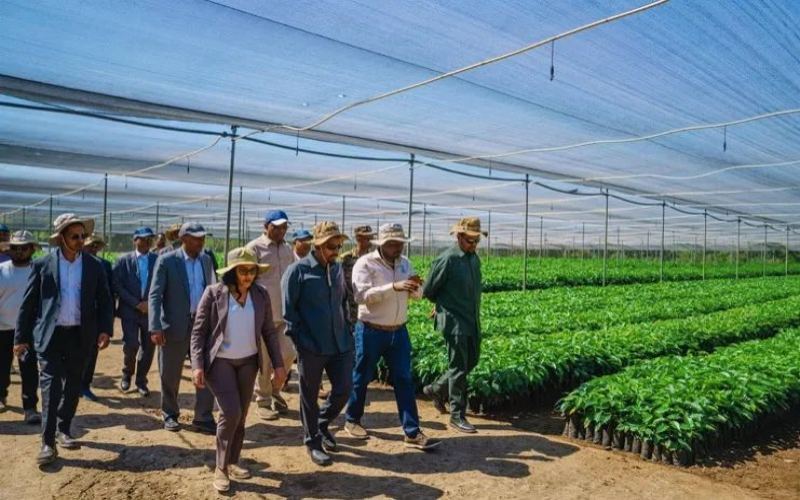
Ethiopia Aims for $2 Billion Coffee Exports in New Fiscal Year, Opportunities and Challenges Coexist
Ethiopia is striving to expand its coffee cultivation area and trade scale, aiming to achieve coffee export revenue exceeding 2 billion USD in the 2024/25 fiscal year. Over the past five years, the country has planted billions of coffee trees and introduced mechanized assistance, with export volumes in October of this fiscal year showing a significant year-on-year increase. However, the industry still faces price volatility, exchange rate risks, and uncertainties brought about by the new pricing mechanism. Meanwhile, Ethiopia and Somalia have signed the Ankara Declaration, which is expected to open up new maritime routes and alleviate logistical bottlenecks in coffee exports. This article will review the latest developments and prospects of Ethiopia's coffee industry. [more…]

Egypt Again Sends Military Aid to Somalia, Tensions in the Horn of Africa Spill Over into Ethiopia's Coffee Industry
Geopolitical tensions in the Horn of Africa are once again heating up. Egypt recently delivered a second batch of military aid to Somalia, including heavy artillery, anti-tank weapons, and armored vehicles, a move that has sparked strong concern from Ethiopia and Somaliland. Behind this series of upheavals lies a multi-layered contest involving Egypt, Somalia, and Ethiopia over the Somaliland port agreement and the Grand Renaissance Dam. As the situation continues to deteriorate, the risk of war is closing in on Ethiopia's eastern coffee-growing region of Harar, while factors such as the imminent EUDR policy and currency depreciation are also profoundly shaping the country's coffee export landscape. [more…]

Jamaica Blue Mountain Coffee Region Flavor Analysis and Pour-Over Parameter Guide: From Historical Origins to Brewing Practice
Jamaican Blue Mountain coffee has long been renowned as a legend in the specialty coffee world, and its unique flavor and scarce production have kept it at the center of coffee conversations for a long time. This article will start with the historical origins and rise to fame of Blue Mountain coffee, deeply analyze how the natural environment of the Blue Mountain range shaped the iconic "Blue Mountain flavor," and one by one explain the grading standards and authenticity identification methods for Blue Mountain coffee. At the same time, Front Street Coffee (FrontStreet Coffee) will take Blue Mountain No. 1 produced by Clifton Estate as an example to share cafe-level pour-over extraction parameters and operating steps, helping coffee lovers reliably recreate this classic coffee's rich sweetness at home. [more…]
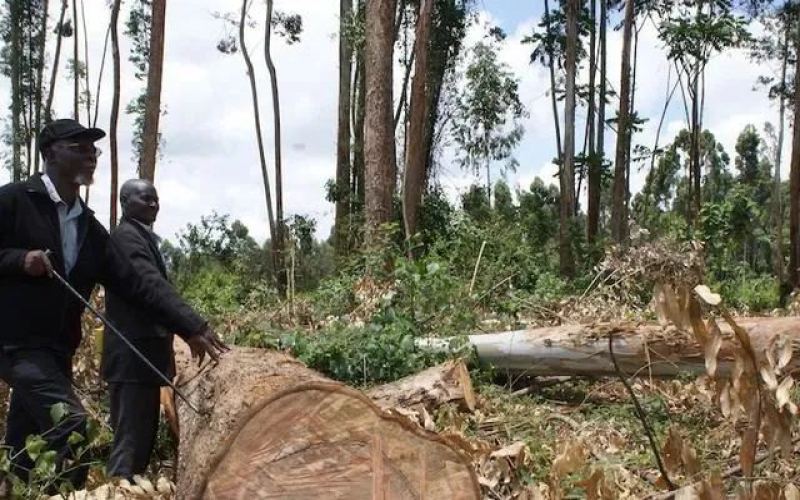
EU Deforestation Regulation Implementation Delayed, Kenyan Coffee Exporters Still Face Mounting Challenges
The European Parliament recently voted to postpone the implementation date of the EU Deforestation Regulation (EUDR) to December 2025, giving Kenyan coffee exporters an extra year of buffer time to adapt to the new rules. However, many exporters remain deeply worried, believing that under current conditions it will be very difficult to meet the EU's strict requirements. The EU is one of the most important overseas markets for Kenyan coffee, accounting for more than 20% of its total exports. Yet with Kenya's fragmented smallholder farmers, underprepared cooperatives, high compliance costs, and multiple pressures including stalled reforms, climate-related production declines, the Red Sea crisis, and port congestion, the outlook for this East African coffee-producing country is full of uncertainty. [more…]